February 1, 2013

Another Umbrella Theme Picture

This is another umbrella-themed post. I think I prefer The Welcome Umbrella photo.

I admit to embellishing this photo in Photoshop, specifically the upper right area. I did this by selecting the umbrella and area above it, clicking on Layer, then New, then Layer/ New/ Layer via Copy. Oh,
 and I locked it in place, then added filters and even part of another image until I got an effect that felt right. I also experimented with various modes of merging the layer onto the background.

Flooding on the Shenandoah

Near Fishers Hill, VA

Like so many places, we had odd weather in January. Last weekend blessed us with warm temperatures (over 70 degrees F.), but the days following brought a return of winter complete with snow. Then Wednesday we had high winds and heavy rain! Many roads were flooded.

This one is just a side road that runs a short distance along the North Fork of the Shenandoah River. Normally the North Fork is peaceful but yesterday it ran fast and overflowing.

January 31, 2013

The Welcome Umbrella

The City Daily Photo theme for February is umbrella. I've been working on a couple of photos for it. This one shows an umbrella in front of a pole that we use for hanging bird feeders. It's commonly called a shepherd's hook, although no shepherd ever carried a hook that looked like this!

Anyway, we are facing into the sun so the decoration on the pole is silhouetted through the umbrella. You can see it in normal mode in previous posts with a woodpecker or an acrobatic squirrel.

Churches of Rockland

Old Methodist Church

Rockland Community Church
We saw these churches on Rockland Road in Warren County. The older one is no longer used but a page on it's history tells us that land was deeded for it in 1891. In 1948 the church members joined with the members of the town's Baptist Church to form the nondenominational Community Church.

Rockland is an unincorporated community north of Front Royal, Virginia.

January 30, 2013

The Old Rockland School House


This old-time school is on Rockland Road near Front Royal. Now an antique shop, it was still a one-room school in the 1960's. The store has a display of photos from when it was a school.

The hand-operated pump would have supplied water.

January 29, 2013

Winter Trees with Vulture


I was attracted to this scene of bare trees on a hill in Rockland (near Front Royal) so I walked closer to get a photograph. The bird flew into the scene as if posing. I think he's a turkey vulture.

January 28, 2013

Drama at Falling Waters, 1863

After I published the recent post on the Civil War Markers at Falling Waters, I read a little more about the 1863 battle there. Most of the action actually took place across the Potomac River in Maryland, and it involved the struggle of Lee's retreating army which needed to cross the river after their loss at Gettysburg.
The river was flooded then, probably higher than it was when we were there, although we did see it swollen from recent snow and rain. Since the marker that we saw covered two battles, it did not give much detail about the retreat from Gettysburg. I figured there would be markers across the river with more information and found one on HMDB telling how wagoners helped save Lee's army at Williamsport. I looked on the Maryland Civil War Trails list and found mention of a marker on the C&O Canal which is only accessible by hiking or biking 2–3 miles from Williamsport! Fortunately someone has shared a photo of this marker on TripAdvisor. I've transcribed most of the text although I'm not sure if I'm reading the numbers correctly as it's a small photo and the sign is not totally clear.

Falling Waters
"Just Charge it to Jeff Davis"
Gettysburg Campaign

The Potomac River trapped Gen. Robert E. Lee and his Confederate army during the retreat from Gettysburg. Flooded by torrential rains on July 4, 1863, the Potomac raged for more than a week, preventing Lee from crossing into present-day West Virginia. Complicating matters, on July 4, Union cavalry operating behind Lee's army had destroyed the pontoon bridge here, severing his umbilical card to the Confederacy. Finally, on July 10, the Confederates completed a pontoon bridge, but it took 3 days for the ambulances and hundreds of ordinance and artillery wagons to cross. By the early morning of July 13, during another downpour, Gen. James Longstreet's infantry corps began tramping across, guided by bonfires on both shores and signal torches on the bridges. Gen. A. P. Hill's corps followed, and by mid-morning the next day 30,000 Confederates were across. Lee's army had escaped.
Another source tells us that Union General Buford's men arrived at the river a little too late. "As our troops neared the bridge," Buford recalled, "the enemy cut the Maryland side loose, and the bridge swung to the Virginia side."

Winter View from An Upstairs Window

I took this picture a few days ago while an inch of snow was on the ground. The sun was low in the sky and would soon disappear behind the Massanutten Mountains.

January 27, 2013

The Pied Painter

One of our neighbors, a house painter by trade, feeds the community geese and feral cats every day. The cats are not really homeless because he built them a shelter and saw to it that they got neutered. When he parks his car at the lake, the geese and cats come running to be fed!

I've seen them watching for him as the usual feeding time approaches. The geese watch from the shore or nearby in the lake and the cats sit on the railroad embankment with their ears perked up, quite alert. All of them appear to be well-fed.

A Pond within a Lake

This is the first winter I've lived so close to a lake so I've been observing the geese. When the lake froze over for the most part, the geese congregated in and around a small area that was still not frozen. I wonder if they were keeping it open so that they could feed in it and also use it for landing.


January 26, 2013

Lynn and the Giant Icicles

Winter, Shenandoah National Park
This photo is from an old family album. My daughter Lynn was showing how big the icicles were along Skyline Drive and she hammed it up a bit.

Is Dreamweaver Worth the Cost?

I've used Dreamweaver for years but I can't decide whether to purchase the upgrade. My old version is not designed for mobile browsers so I downloaded a trial of CS6. This is the last day of the free trial and I must admit I barely scratched the surface because I am not trained in the new features. I learned HTML back in the 90's and I don't even understand all the new rules. 

With the trial version, I updated two pages in my Civil War Field Trips site but did not even get into the mobile-browser changes. My site is heavy in tables and it's too big to change. I also updated my Shenandoah links page. It now works okay on our iPad. 

I don't need Dreamweaver for blogging but I do maintain several other websites. If you create websites or code in HTML, what tools do you use?

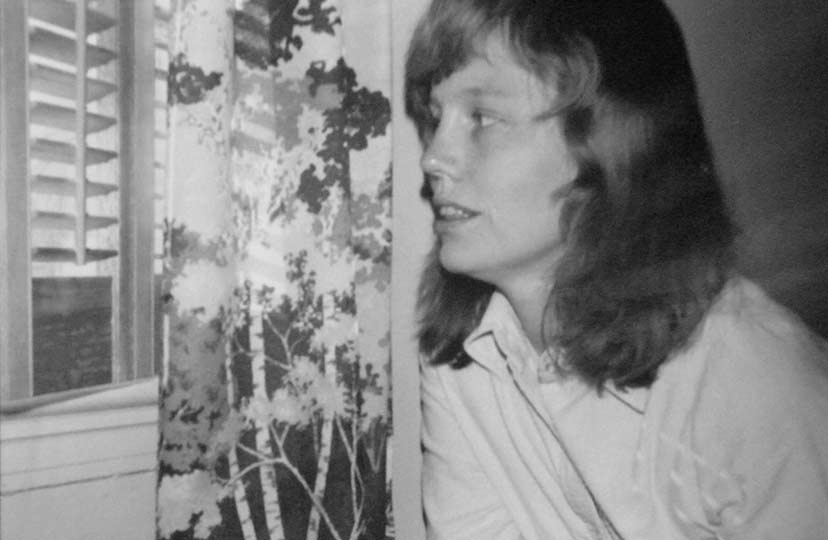
An Old Self-Portrait

This photo of me is from longer-ago-than-I-wanna-admit! We were living on Leslie Avenue in Alexandria at the time.

January 25, 2013

Jay and Dove

Blue Jay and Mourning Dove
Their latin names are Cyanocitta cristata and Zenaida macroura so I think I'll call them Crista and Zena. Here they are peacefully feeding together even though the FCPS nature site says that Blue Jays don't like to share AND that they are predators of Mourning Doves!

January 24, 2013

Civil War Markers at Falling Waters


Falling Waters Battlefield is not the easiest historic site to tour but at least there are some markers to help you interpret it. The first one we stopped at was Stumpy's Hollow on Hammonds Mill Road, where "J.E.B. Stuart captured a Union infantry company almost single-handedly." The zig-zag rail fence was erected by the local battlefield foundation, adding an attractive element that actually relates to the story told on the sign.

The old-style marker in the second photo is along U.S. 11 in a commercial area. There's a new Civil War Trails marker nearby but I liked the old look of this monument which was erected by the United Daughters of the Confederacy. It tells us that "On this site July 2, 1861, General Jackson was seated under an oak tree giving orders when fired upon by Federal troops. A cannon ball cut off a limb of the tree, but Jackson, unhurt, rode calmly away."

The third photo shows Frank looking at the marker next to the waterfall that gave the town the name "Falling Waters." It's on Embankment Road between U.S. 11 and the Potomac River. It tells about both battles that took place near here, one in 1861 (which was the first battle to take place in the Shenandoah Valley and is sometimes calling Hoke's Run) and another in 1863 during the Confederate Army's retreat from Gettysburg.
Falling Waters Battlefield has had little permanent protection. I hope that the efforts of local groups to preserve it will be successful.

Links: Clickable Map on HMDB
Falling Waters Battlefield Assn. in Print 
Prelude to Manassas at Falling Waters
Recognizing the Daughters of the Confederacy

Another Look at Falling Waters


I made a short video and posted it on YouTube.

January 23, 2013

The Falls of Falling Waters

Falling Waters, WV

waterfall


Not to be confused with Fallingwater in Pennsylvania, the small town of Falling Waters is just north of Martinsburg, West Virginia.


I'd seen the sign for Falling Waters on Interstate 81 and wondered about the name. When I learned that there was a Civil War battle there, I decided to look it up.

At first it did not sound like a place worth driving to. The battlefield has not been preserved in a way that would make sense without a guide, and until recently there were very few historical markers. But there was a battlefield group working on improvements. Eventually some Civil War Trails markers went up and I put the area on my list of places to visit.

This past weekend provided us some mild weather that I did not want to waste by staying indoors, so I looked up the sign locations on Historical Markers Database.

I was pleased to see a photo of a waterfall and a note that it is "located just south of the marker." When we got there we found another sign as well indicating the presence of the falls, which we could already hear below us. The path there is steep but very short. I would not take it on an icy day; however, you could slip and end up in the river!

January 22, 2013

The Potomac at Falling Waters


There's a campground on the shores of the Potomac at Falling Waters, West Virginia, where you have this view. We reached it by parking at a Civil War Trails Marker and walking along a short but narrow path under a railroad bridge.

January 21, 2013

What Creature is This?

A Shadow Not a Shark
I took this photo at the Potomac River in West Virginia. That odd shape is the shadow of a large tree.

Holidays, Oratory, and History

Today was both Martin Luther King Day and Inauguration Day. (It was also Squirrel Appreciation Day but that pales in significance unless you happen to be a squirrel.)

The inauguration of a president is traditionally a time for speeches, which makes me think of Lincoln's Second Inaugural Address, one of the greatest speeches made during the Civil War. (Lincoln's Gettysburg Address was another one, of course.) And more recently Martin Luther King made some great and influential speeches, which is one of the reasons we celebrate his birthday. My brother actually heard Dr. King speak at the March on Washington for Jobs and Freedom in 1963! (We lived in nearby Fairfax County at the time and my brother was home from college for the summer.)

The other day I heard on the radio that schools are being encouraged to devote more time to having students read great speeches. I guess we had gotten away from that and now we are moving back. Seems like a good idea! Abe Lincoln studied the great speeches of the past, apparently learning them from The Columbian Orator, which was also studied by Frederick Douglass. Both of these men became great orators, and no doubt that book helped countless other students to improve their speaking and writing skills.